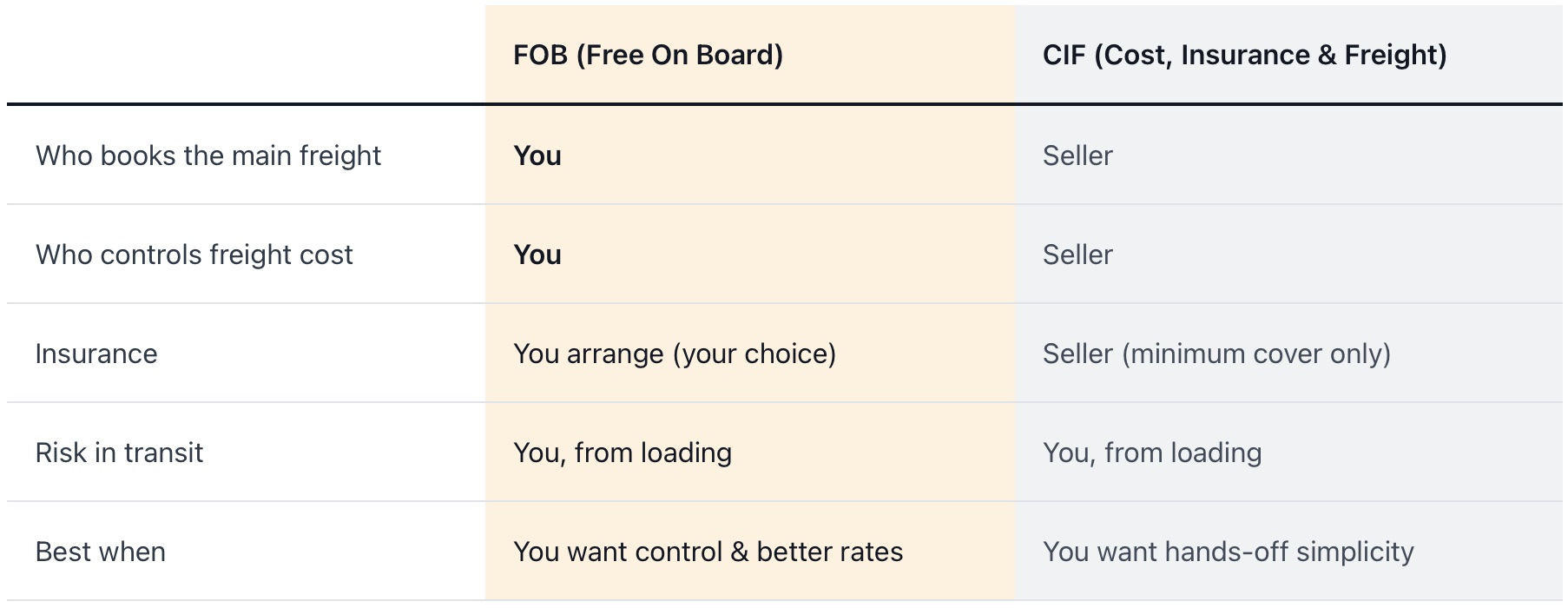
The short answer: FOB puts you in control of the shipping; CIF hands that control to the seller. With FOB, you arrange and pay the main freight from the origin port. With CIF, the seller arranges freight and insurance to your port — convenient, but you give up control of cost and cover.
Either way, the risk is yours from origin.
FOB vs CIF, side by side
Why CIF can quietly cost you more
CIF looks easier because the seller “handles shipping.” But here’s what often happens: the seller marks up the freight and may earn a rebate from their forwarder — so you pay above market rate, baked invisibly into the CIF price.
With FOB, you (or your sourcing agent) book freight directly at real market rates and see every line item. For repeat or larger orders, that difference adds up.